

Witness the Great Serengeti Migration in Tanzania
Witness the Great Serengeti Migration with wildebeest river crossings and unforgettable wildlife safari experiences.
Great Serengeti Migration Overview
The Great Serengeti Migration is one of the most spectacular wildlife events in the world, where millions of wildebeest, zebras, and gazelles move across Serengeti National Park in search of fresh grass and water. This incredible journey takes place throughout the year and includes dramatic river crossings, predator encounters, and breathtaking wildlife scenes that create an unforgettable Serengeti safari experience.
A Great Serengeti Migration safari gives travelers the chance to witness nature at its most powerful, from the calving season in Southern Serengeti to the famous Mara River crossings in Northern Serengeti. Along the migration route, visitors can also enjoy Big Five wildlife viewing, scenic landscapes, and guided game drives, making it one of the best Tanzania safari tour experiences for wildlife lovers and photographers.
_edited_edited.jpg)



What Causes the Great Wildebeest Migration?
The Great Wildebeest Migration is mainly caused by the search for fresh grass and water across the ecosystems of Serengeti National Park and the Maasai Mara. Each year, more than 1.5 million wildebeest, along with zebras and gazelles, move in a circular pattern following seasonal rainfall and new grazing areas. This natural movement creates the famous Great Serengeti Migration, one of the most incredible wildlife events during a Serengeti safari.
Rainfall plays the biggest role in determining where the herds move throughout the year. During the green season, the herds gather in Southern Serengeti for the calving season, where thousands of wildebeest calves are born between January and March. As the dry season begins, the animals move north in search of water and greener grass, leading to dramatic river crossings filled with predators such as crocodiles, lions, and hyenas.
The migration is not a single event but a continuous wildlife cycle that changes month by month. This makes every Great Serengeti Migration safari unique, offering different wildlife experiences depending on the season and location visited during your Tanzania safari tour.
Migration Timing & Routes
Southern Serengeti (January – March | Calving Season)
From January to March, the migration herds gather in the Southern Serengeti plains around Ndutu and Kusini after the short rains. This period is known as the calving season, where up to 8,000 wildebeest calves can be born in a single day during peak weeks. The open plains provide fresh grass for newborn calves and attract predators such as lions, cheetahs, hyenas, and leopards, creating dramatic wildlife action during a Serengeti safari.
This is also one of the best times for photography because of the green scenery, active predators, and large herd concentrations. Compared to river crossing season, crowd levels are usually lower, offering a quieter and more scenic Tanzania safari tour experience.

Westward Journey (April – June)

Between April and June, the herds begin moving west through the Seronera Valley and Grumeti corridor as the rains slowly end. During April, wildebeest breeding season, also known as the rut, begins as males compete for females across the plains.
By June, the migration prepares to cross the Grumeti River, where crocodiles wait along the riverbanks. Although the crossings here are smaller than the famous Mara River crossings, they still provide exciting wildlife moments and excellent game viewing opportunities during the Great Serengeti Migration.
North to Kenya (July – October | River Crossings)
From July to October, the herds move north toward the Mara River in Northern Serengeti and into Kenya’s Maasai Mara. This is the most famous stage of the Great Serengeti Migration safari and one of the most dramatic wildlife spectacles in Africa.
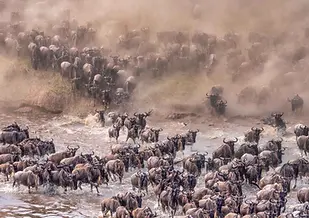
During August and September, thousands of wildebeest rush into crocodile-infested currents while attempting dangerous river crossings. The crossings are unpredictable, intense, and filled with predator action, making this period the peak season for many travelers visiting Serengeti National Park. Lions, crocodiles, leopards, and hyenas all take advantage of the migration movement, creating unforgettable safari moments.

Return South (October – December)

As the short rains begin between October and December, the migration slowly moves back south through the eastern Serengeti plains toward Ndutu and the Southern Serengeti.
This period offers beautiful green landscapes, active wildlife, and fewer safari crowds compared to peak river crossing months. Although river crossing action decreases, travelers can still enjoy excellent game drives, predator sightings, and peaceful Serengeti safari experiences before the next calving season begins again.
Best Viewing Locations for the Great Serengeti Migration
The Great Serengeti Migration safari can be experienced in different locations depending on the season. Each area of Serengeti National Park offers unique wildlife action, from calving season to dramatic river crossings, making every Serengeti safari unforgettable.
Ndutu & Ngorongoro Area (January – March | Calving Season)
This is the best place to witness the calving season in the Southern Serengeti and Ndutu plains. Thousands of wildebeest give birth here, attracting lions, cheetahs, and hyenas. The open plains near Ngorongoro Crater also support high predator activity and excellent photography opportunities.
Recommended stays: Ndutu Safari Lodge, Lemala Ndutu Camp
Seronera Valley (Year-Round Wildlife)
Located in central Serengeti, Seronera is famous for resident wildlife that stays throughout the year. It is one of the best areas to see lions, leopards, elephants, and buffalo even when the migration is moving elsewhere.
Recommended stays: Serengeti Serena Safari Lodge, Kubu Kubu Tented Lodge
Grumeti & Lamai Region (May – July | Western & Northern Movement)
The Grumeti corridor and Lamai region become active during the westward migration. This is where herds prepare for and begin river crossings. Crocodile-filled rivers make this stage exciting and dramatic during a Great Serengeti Migration safari.
Recommended stays: Singita Grumeti, &Beyond Grumeti Serengeti Tented Camp
Mara River & Lamai Wedge (July – October | River Crossings)
This is the most famous migration hotspot where the dramatic Mara River crossings take place. Between August and September, thousands of wildebeest cross crocodile-infested waters in unpredictable and thrilling scenes. This is the peak highlight of the Serengeti safari experience.
Recommended stays: Lemala Kuria Hills, Sayari Camp, Serengeti Mara Camp

Great Serengeti Migration Safari Lodges & Camps

Premium/High-End
One Nature Mara River
Serengeti National Park
Collection: One Nature Hotel

Standard
Lemala Mara Camp
Serengeti National Park
Collection: Lemala Camps and Lodge

Premium/High-End
Nimali Mara
Serengeti National Park
Collection: Nimali

Upper Mid-range
Enkutoto Migration Camp
Serengeti National Park
Collection: Acacia Collection

Standard
Serengeti Mara River Camp
Northern Serengeti
Collection: Karibu Camps

Mid-range
Mara River Camp - TBC
Serengeti National Park
Collection: Tanzania Bush Camp
Best Great Migration Tanzania Safari Packages

5 Days/4 Night
5 Days Ndut Great Migration Safari
Start From
$500
Per Person


6 Days/5 Night
6 Days Ndutu Calving Season Safari
Start From
$1,890
Per Person


Planning Your Great Serengeti Migration Safari
Planning a Great Serengeti Migration safari helps you enjoy a smoother and more comfortable Tanzania safari tour experience. From safari costs and packing tips to travel logistics and safety, proper preparation ensures you get the most out of your Serengeti safari adventure.
Costs & Budget
The cost of a Great Serengeti Migration safari depends on the travel season, accommodation level, safari duration, and whether you choose a private or group safari.
-
Mid-range safaris: usually range from $2,000–3,500 per person for 5–7 days.
-
Luxury migration safaris: often range from $4,000–5,000+ per person, especially during peak river crossing season.
Most Tanzania safari tours include:
✔ Professional safari guide
✔ 4x4 safari vehicle
✔ Park fees
✔ Accommodation
✔ Meals
✔ Game drives
When comparing safari prices, always check what is included, the location of lodges, and whether domestic flights or transfers are part of the package.
What to Pack for a Serengeti Migration Safari
Packing correctly is important for comfort during your Great Migration Tanzania safari.
✔ Light long-sleeve clothing
✔ Neutral safari colors
✔ Hat and sunglasses
✔ Sunscreen
✔ Binoculars
✔ Camera and extra batteries
✔ Insect repellent
✔ Travel insurance
✔ Comfortable closed shoes
✔ Lightweight trousers for wet season travel
During the green season, roads can become muddy, so waterproof gear and closed shoes are highly recommended.
Health & Safety
A Serengeti safari is generally very safe when traveling with professional guides and trusted safari operators.
Travelers should consider:
✔ Yellow fever vaccination (if required)
✔ Malaria prevention medication
✔ Personal travel insurance
✔ Drinking bottled water during safari
Families with children can safely enjoy a Great Serengeti Migration safari by choosing private 4x4 vehicles and family-friendly lodges. Visitors should always follow park rules, remain inside the vehicle near wildlife, and listen carefully to safari guides. Night drives are only allowed with authorized guides in selected safari areas.
Thinking About a Great Serengeti Migration Safari? Let’s Plan It Together